Quick Immediate Wins for Service Businesses
How to choose one safe, monitored first automation when leads, estimates, invoices, and owner follow-up all feel urgent.
Most service businesses do not need to automate everything first.
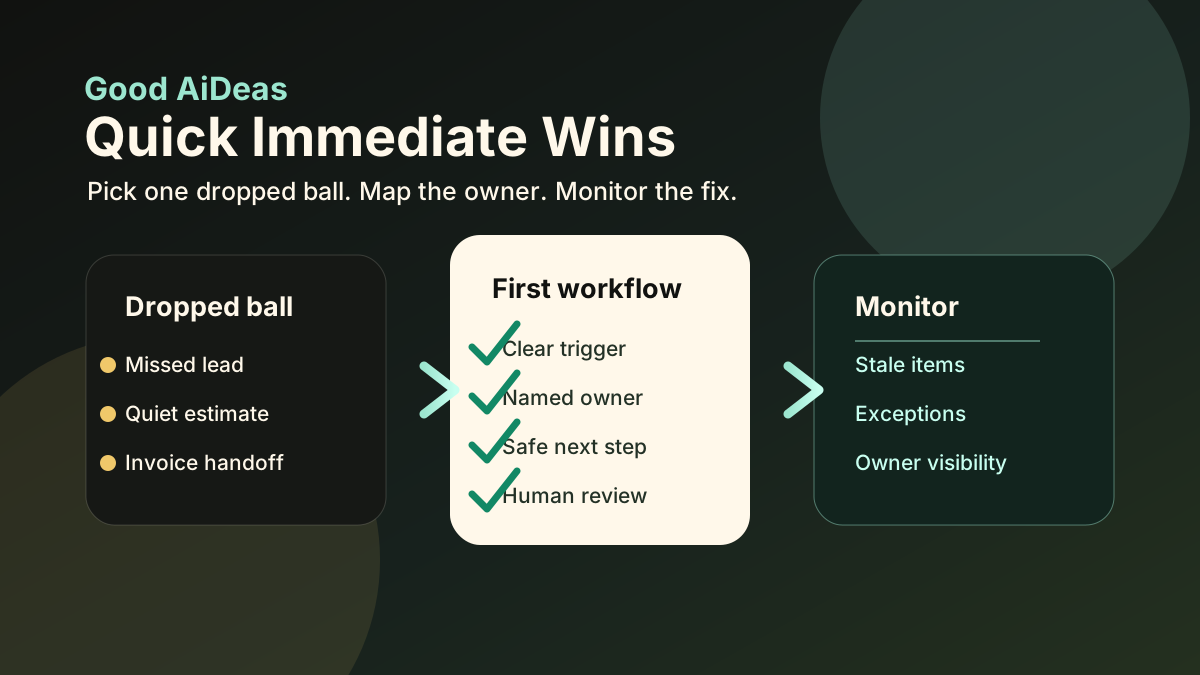
They need one useful win that proves the operating pattern: a clear trigger, a named owner, a safe next step, human review for judgment, and a monitor that shows whether work is still getting stuck.
The short answer
A Quick Immediate Win is one focused workflow improvement for a service business. It usually protects a repeated handoff such as missed lead response, estimate follow-up, invoice reminders, job-note cleanup, or owner visibility. The first win should be narrow enough to build and monitor quickly, but important enough that the owner can feel the dropped ball today.
If every problem feels urgent, start with the Ops Scorecard. If the first fix needs to become a build, the commercial path is Quick Immediate Wins.
What makes a good first win?
A good first win is not the flashiest automation. It is the workflow the team can trust because the boundaries are obvious.
Use these filters before building:
| Filter | Good signal | Weak signal |
|---|---|---|
| Repeated | Happens every week or every day | Happens a few times a year |
| Triggered | Starts from a call, form, status, estimate, invoice, or date | Starts from memory or vague judgment |
| Owned | One role reviews the next step | Everybody assumes somebody else has it |
| Safe | Routine action can be drafted, routed, reminded, or summarized | Customer promises or pricing decisions would be made automatically |
| Measurable | You can count stale items, response time, missing notes, or overdue follow-up | Nobody knows what changed after launch |
The best first win usually feels practical, not dramatic. That is the point.
Five Quick Immediate Win candidates
1. Missed lead response
Missed calls, web forms, voicemail, and after-hours messages are usually easy to identify. A safe workflow can acknowledge the inquiry, collect basic context, route it to the right person, and flag urgent issues for review.
If this is the core leak, use the Speed-To-Lead Engine path.
2. Estimate follow-up
Sent estimates often disappear into inboxes, spreadsheets, or memory. A focused workflow can watch sent dates, prepare a follow-up queue, pause when the customer replies, and show the owner which opportunities need attention.
If quiet estimates are the clearest leak, use the Estimate Follow-Up Engine.
3. Invoice and payment handoffs
Finished jobs do not always become clean billing handoffs. A first win can watch for completed work, missing invoice context, overdue reminders, or exception reasons that need a person.
This does not replace accounting judgment. It makes the waiting list visible.
4. Job-note cleanup
Field work creates downstream problems when notes, photos, materials, or next steps are incomplete. A narrow workflow can ask for missing details, route exceptions, and summarize what is not ready for billing or customer follow-up.
This is useful when office staff keep chasing the same missing information.
5. Owner visibility
Owners often become the reminder system because they cannot see what is stuck. A first win can create a daily or weekly exception summary: stale leads, quiet estimates, missing job notes, overdue invoices, and customer replies waiting for review.
The point is not another dashboard. The point is fewer invisible handoffs.
How to choose between them
When several workflows matter, pick the one with the strongest mix of pain, clarity, and safe action.
Ask:
- Which dropped ball is easiest to see right now?
- Which one has the clearest owner?
- Which one has a safe automatic step that does not make a promise to the customer?
- Which one would reduce owner chasing if monitored weekly?
- Which one connects closest to revenue protection or trust?
If two options tie, choose lead response or estimate follow-up. Those usually have clearer triggers, easier measurement, and stronger urgency.
What should stay human?
A Quick Immediate Win should keep judgment visible.
Humans should still own:
- Pricing, discounts, and scope changes.
- Customer complaints and sensitive replies.
- Scheduling conflicts.
- Warranty or safety issues.
- Final approval for anything outside the approved workflow.
Automation can draft, route, remind, summarize, and monitor. It should not pretend to run the relationship by itself.
A simple example
A contractor has three active problems: missed calls, late estimate follow-up, and incomplete job notes.
The owner wants all three fixed. The fastest safe move is to score them first:
- Missed calls have a clear trigger and clear urgency.
- Estimate follow-up has a clear sent date but needs rules for pausing.
- Job notes are painful, but ownership varies by crew.
The first Quick Immediate Win would likely be missed lead response or estimate follow-up. Job notes can come next after ownership is clearer.
That sequence protects momentum. It also avoids building a broad workflow around a messy process nobody owns.
How this connects to the Good AiDeas funnel
Start with the Ops Scorecard when the first dropped ball is unclear. Use Quick Immediate Wins when one monitored first fix should be scoped. Move into Operations Automation for Service Businesses when the first fix needs to connect to a broader operating system.
For supporting reading, see Service Business Operations Automation Checklist, Back Office Automation for Contractors, and Field Service Automation for Small Businesses.
The goal is simple: one useful workflow, monitored after launch, with people still responsible for judgment.
Next step
Find the leak, then pick the monitored fix.
Not sure which workflow is leaking attention first? Start with the Scorecard, or continue into the offer most related to this field note.
For websites where unclear offers, forms, and routing make monitored automation harder to trust.